Every business has an origin story. Mark Tatum’s starts not behind a register, but in the passenger seat of his own car, driving cannabis to dialysis patients and cancer patients back in 2014. Long before SkunkMasters had a storefront, a lounge, or a reputation across Ventura County, it had a purpose: getting a plant he believed in to people who needed it. That belief — that responsible cannabis access improves people’s actual quality of life — is the thread running through everything Mark has built since.
SkunkMasters didn’t start big. For years, the shop operated out of roughly 450 square feet — barely more than a showroom, tucked around the corner from where the dispensary sits today. Space was tight. Lines formed outside. Staff worked shoulder to shoulder just to keep up.
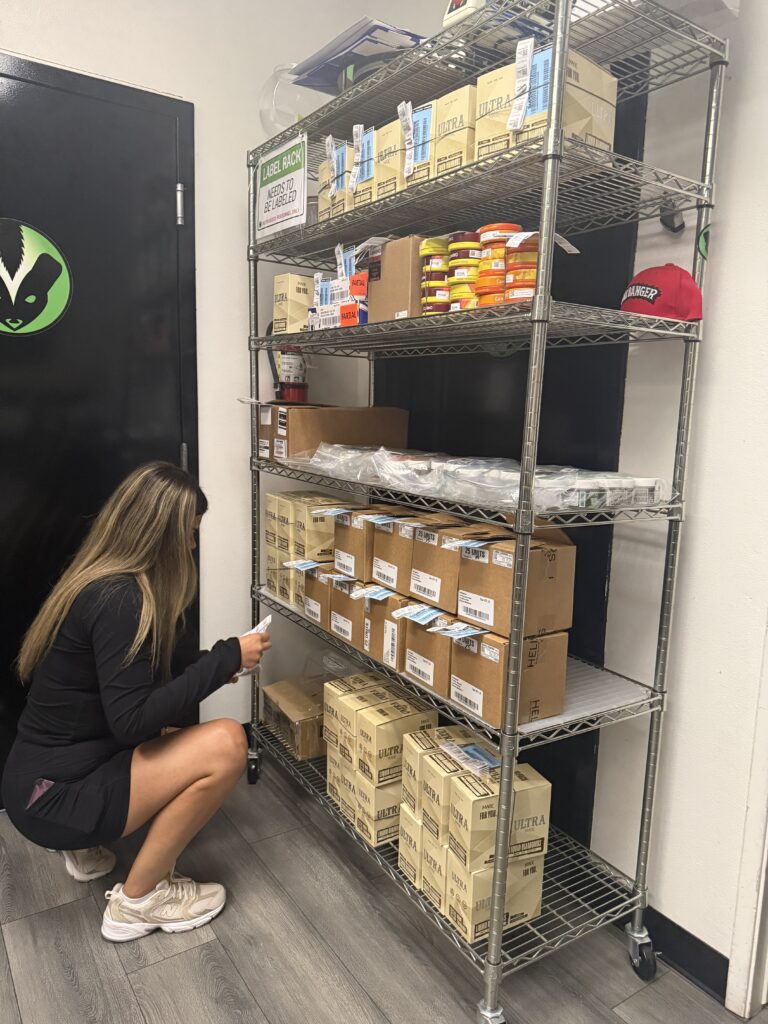
But what the shop lacked in square footage, it made up for in discipline. From early on, Mark ran SkunkMasters less like a typical retail counter and more like a pharmacy: floor samples out front, product secured behind a window, an armed guard on site, staff trained to catch compliance issues before an inspector ever walked in. Every product carries a blue compliance tag that state inspectors can scan on the spot, cross-referencing batch numbers against inventory during unannounced visits. Unsold product isn’t marked down — it’s destroyed, its batch number logged on a whiteboard, mixed with sand and water in a bin. “It’s just like produce,” Mark says. “Freshness is key.”
That discipline wasn’t optional. Cannabis remains federally illegal, which means traditional banks won’t touch cannabis businesses, and even employees have had personal bank accounts flagged simply for depositing a paycheck from a dispensary. Section 280E of the federal tax code piles on, blocking cannabis businesses from writing off standard operating costs the way any other small business can. “Every year we get hit with this federal income tax bill that’s just ridiculous,” Mark says.
Years of operating under that kind of pressure built something that would matter more than Mark could have predicted: a business that already knew how to survive when the odds were stacked against it.
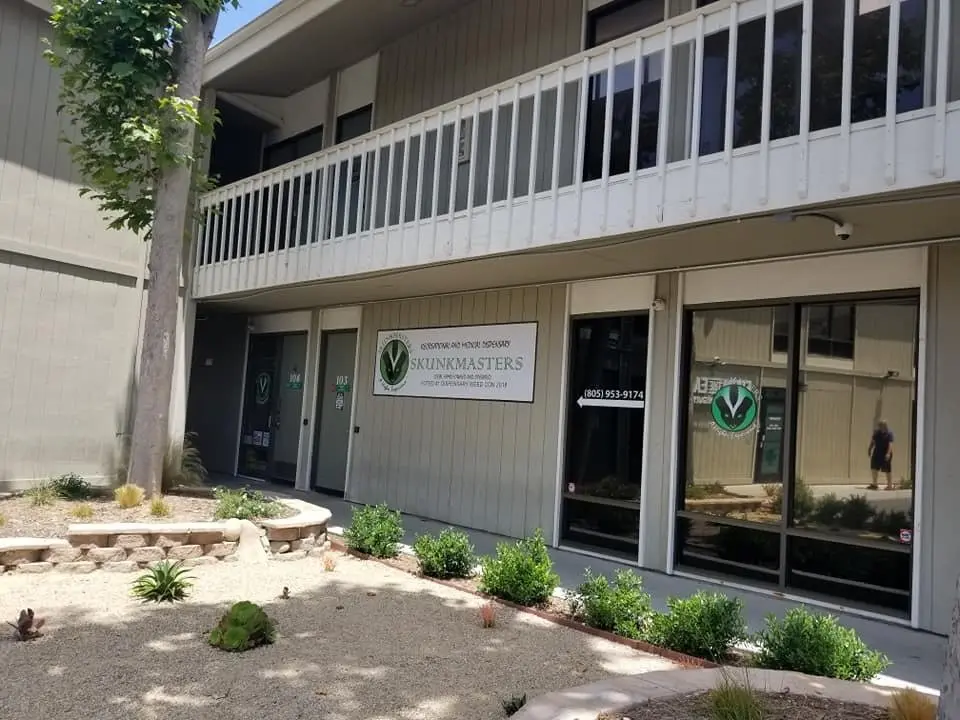
In March of 2020, while most business owners in Ventura County were boarding up storefronts and laying off staff, Mark was doing the opposite — signing a lease on a space many times larger than the one he already had.
“During the pandemic it was kind of a race to get into the bigger space,” he says now, almost casually, as if relocating a business in the middle of a global shutdown were an obvious call. He wasn’t chasing growth for its own sake. He was chasing room to breathe. “We wanted to give our customers more space, more room to feel comfortable,” he says.
He bet on the business surviving. Then the bet paid off in a way nobody could have scripted.
Not long after SkunkMasters relocated, Mark got a call from the local police chief. Cannabis dispensaries, alongside grocery stores and pharmacies, had just been classified as essential businesses in California — allowed to stay open while nearly everything else around them closed. “He said, ‘People need their meds. They need the benefits of cannabis,'” Mark remembers. For a stretch of the pandemic, SkunkMasters and the grocery store down the street were some of the only doors still open in the area. “It was pretty much… at one point it was us and the grocery stores,” he says. “We stayed open.”
For a business that had spent years fighting stereotypes about drug dealers and back-alley deals, the essential classification was more than a lucky break — it was validation of everything Mark had believed since those first dialysis-patient deliveries in 2014. The community he’d been quietly serving for years turned out to need him more than ever, right when it counted most.
Most businesses that made it through 2020 spent the next couple of years just trying to claw back to normal. Mark used the momentum to build something that hadn’t existed before.
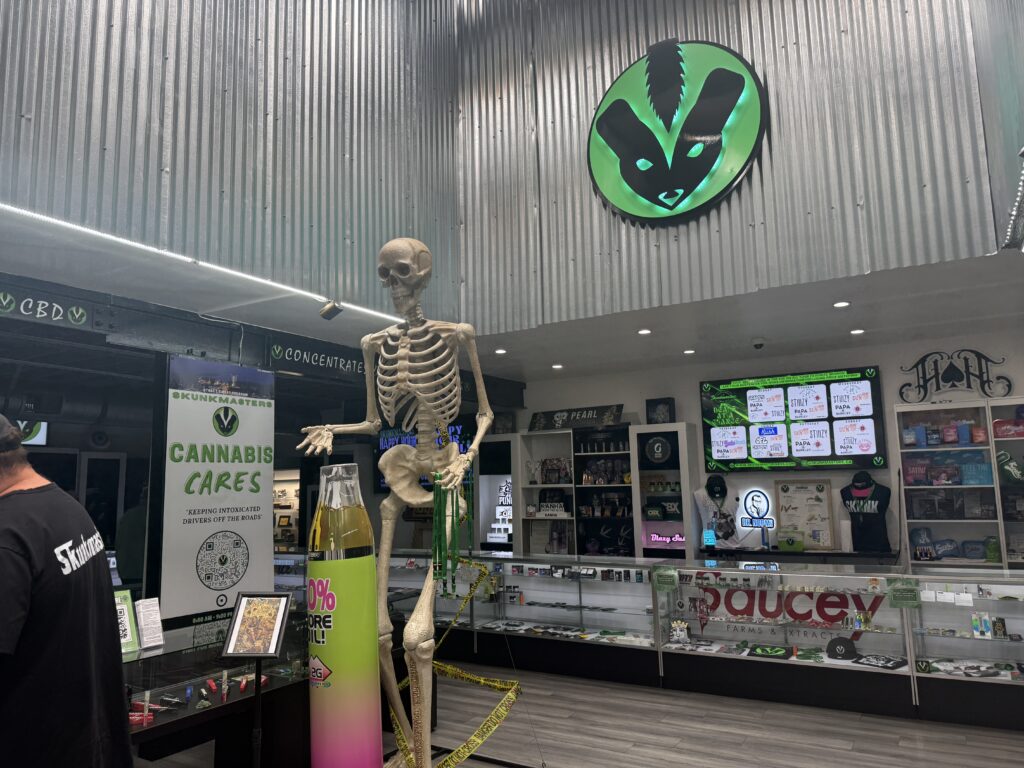
The lounge — a full cannabis consumption space adjoining the dispensary — is what turned SkunkMasters from a place people visited into a place people spent their evenings. Comedy nights. Movie nights. FIFA tournaments on a projector screen. A recurring “Puff and Pancakes” event built around a partnership with a local podcast host. None of it would have made sense in the original 450-square-foot location. All of it became possible because Mark had already made the leap to more space, at the exact moment everyone else was retreating.
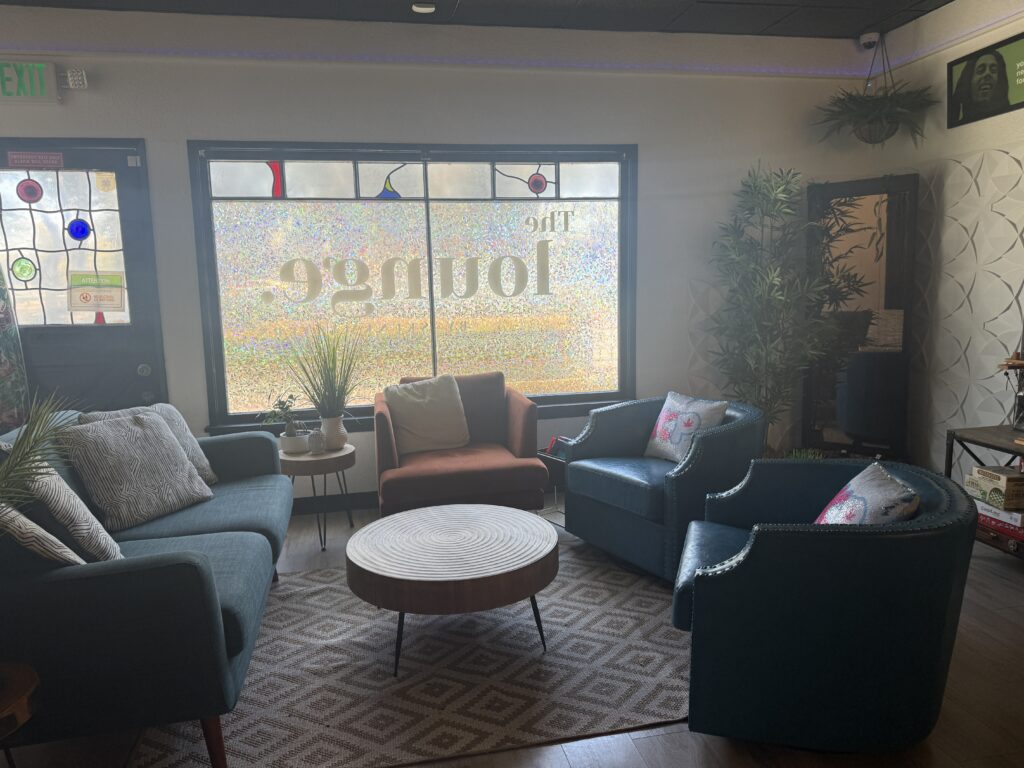
“You’ll see all walks of life and all ages together, sitting at a table, sharing stories and laughing together — people you would have never suspected would be hanging out together,” Mark says of the lounge today.
He draws a sharp line between that atmosphere and a bar. “No riffraff. There’s never been fights. No one’s coming in here looking for an argument. People come in here looking for a place to escape, to mingle, to be social.”
He remembers walking through a few nights before this interview and seeing two older regulars who always claim the same table in the sun room, sitting across from a group of younger guys who’d never met them before — all of them laughing together. “Everyone’s warm. Everyone’s welcome,” he says. “It’s not like walking into a bar and getting the side-eye — ‘Oh, who’s this guy?'”
As SkunkMasters grew, so did the number of outside investment groups and corporate chains moving into neighboring cities, chasing a Ventura County cannabis market Mark believes is already oversaturated. His response has been to double down on the local relationships that got him here in the first place. “We hire local. We’ve had super long-time employees here. We only contract with other local businesses,” he says. “Just don’t pump the money out of the community.”
Some of those relationships run deep. One longtime staff member has built real connections with the retirement community just two blocks from the shop — giving CBD presentations at their HOA meetings, earning trust from a generation that came up genuinely afraid of cannabis and is now, quietly, some of its most loyal advocates. It’s the kind of trust that doesn’t happen overnight, and it’s exactly the kind of trust that made the essential-business classification feel earned rather than lucky.
Ask Mark what he’d change if he could wave a magic wand, and he doesn’t hesitate: he wants the public educated on why buying local matters, and he wants to keep building on the community his lounge created.
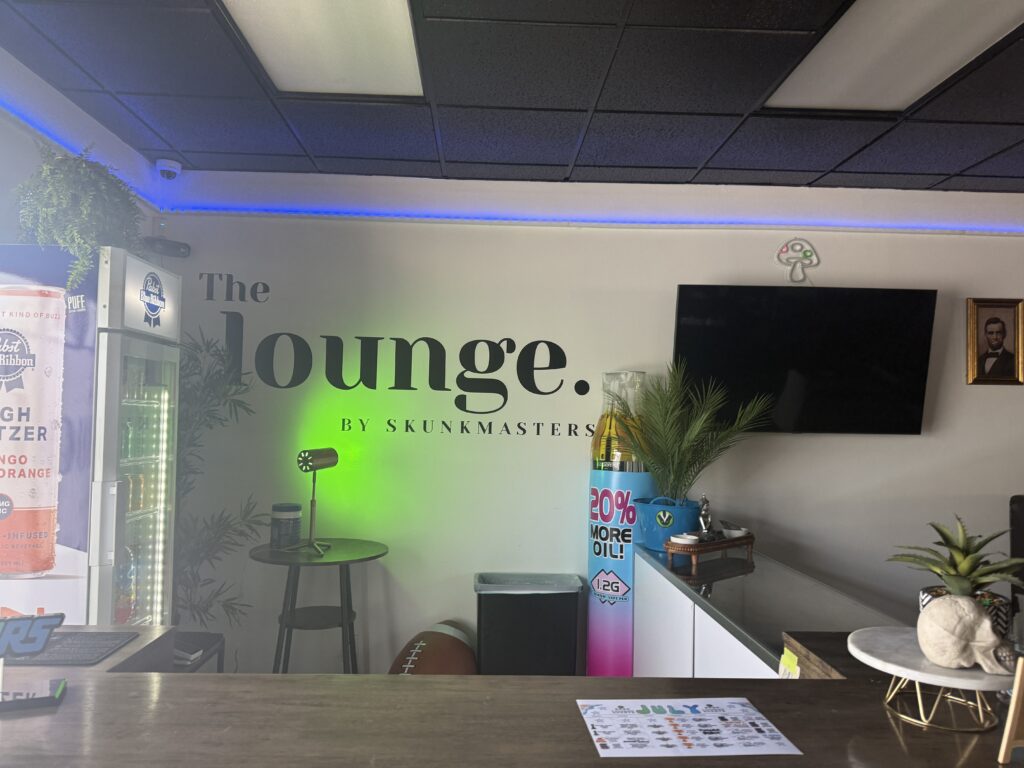
Five years ago, Mark was racing to move into a bigger space with no idea what was coming next. Today, that space houses a dispensary and a full lounge next door.
It’s the events, more than anything, that keep pulling people back through the door. “It kinda gets people in here,” Mark says, “and then once they’re in here, they’re like, ‘Oh my God. Why didn’t I know about this?'”
For Mark, that’s the whole point. The dialysis deliveries in 2014, the gamble on more space in 2020, the lounge built out of a pandemic lull — none of it was really about the business getting bigger. It was about giving Port Hueneme a place where people show up, stay a while, and end up sitting across from someone they’d never have met otherwise.